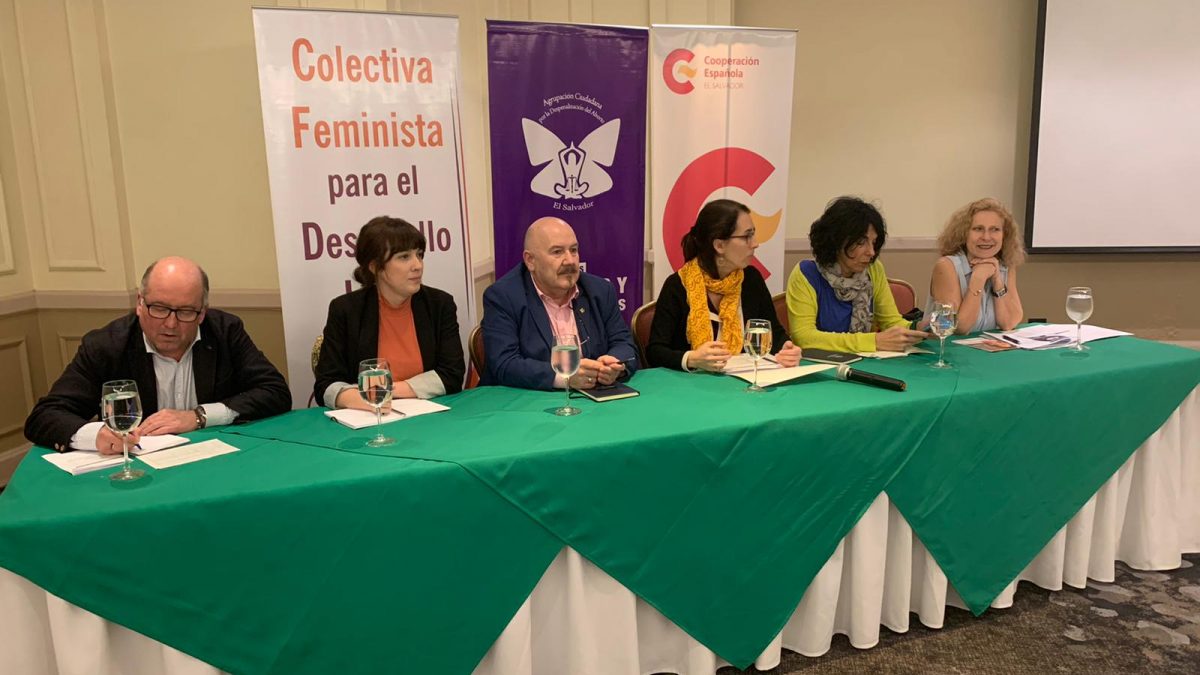
EL SALVADOR - The Basque Country APPG has just returned from a study visit to El Salvador whose objectives were to have more knowledge, on the ground and first hand, of the situation and debates about health and SRHR, dialogue and exchange experiences with Salvadoran organizations that defend these rights and learn from Salvadoran initiatives to advance the national and international agenda on population and development. The visit was promoted and organised by the Feminist Collective and the Citizen Group for the Decriminalization of the Ethical and Eugene Therapeutic Abortion with the support of the Spanish Cooperation Technical Office (OTC) in El Salvador and supported by FPFE.
In 2018, El Salvador reported the highest rate of femicides in Latin America and the Caribbean, with 6.8 per 100,000 women. In 2017, the national rate of sexual violence was 175.3 per 100,000 women. In addition, in 2015 there were 25,132 pregnancies of girls and adolescents, 30% of pregnancies in the country. Of these, 1,445 were between 10 and 14 years old and did not have the option of being able to decide the termination of pregnancy due to the penalty of abortion in the country.
During their visit, Basque parliamentarians have exchanged experiences and proposals for action and collaboration with civil society organizations, diplomatic representatives, United Nations agencies, ministries and other public bodies.
From the absolute respect for the country's policies and institutions, the members of the intergroup have expressed their concern about the situation of access to education and guarantee of sexual and reproductive rights that Salvadorans live, especially the situation of women imprisoned for suffering obstetric emergencies or spontaneous abortions, as Iñigo Iturrate, APPG coordinator, pointed out after visiting one of the prisons where women serve sentences of up to 30 years for this reason.
During the intergroup visit, a public forum was held in which representatives of civil society and journalists participated, and which served to take stock of the progress and challenges in meeting, more than 25 years later, the objectives of the International Conference on Population and Development in Cairo. In this forum, as well as throughout the visit, the Basque MPs had the opportunity to recognise the great work of Salvadoran organisations.
During the forum, Natalia Rojo, MP of the Socialist Party, stressed that “the biggest challenge is to move from the equality of the word to the equality of the facts. Never make politics with your back to society. ”
Among the meetings with representatives of the governmental institutions of El Salvador, it is necessary to highlight the meeting with the president of the Legislative Assembly, Mario Ponce; with the members of the Women's Commission in the Legislative Assembly and with the Youth Parliamentary Group, to exchange experiences on the achievements and operation of APPG in the Spanish Congress and in the Parliament of Basque Country.
Throughout the visit, multiple organisations repeatedly expressed the lack of family planning services and supplies for those who need them most, particularly in rural areas. They also pointed out the absence of these services for young people, and that they suffer both these and in general the population of El Salvador. The Basque deputies have been told about the reality of stigmas, silence, misinformation and myths around sexuality, and the innumerable direct and indirect legal barriers to accessing services and information on sexual and reproductive health. This situation is also framed by threats against sexual and reproductive rights and the organisations that defend them, not only in El Salvador but throughout the world, by highly organised coercive and fundamentalist organisations that put pressure on governments, to deputies and civil society organisations.