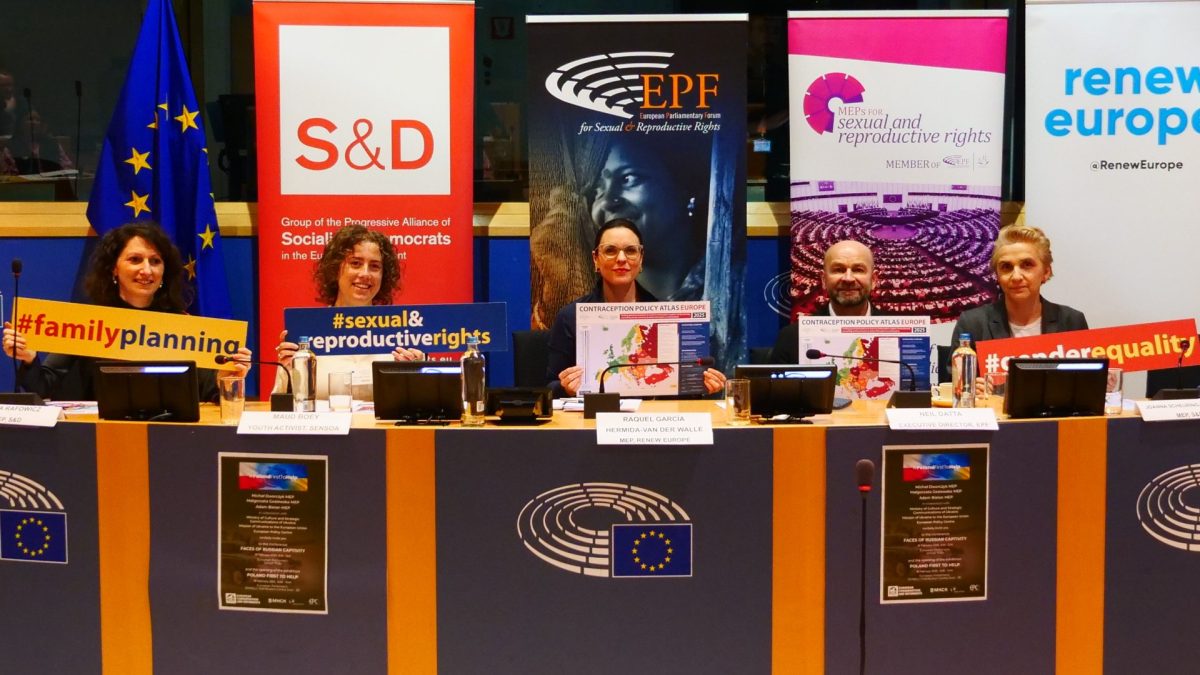
BRUSSELS, 18th February 2025 - The European Parliamentary Forum for Sexual and Reproductive Rights (EPF) presents the Contraception Policy Atlas Europe 2025, a comprehensive mapping of contraceptive access across 47 countries in the European region and the Youth Contraception Awareness Study. MEPs Joanna Scheuring-Wielgus (S&D, Poland), Raquel Garcia Hermida-van der Walle (Renew Europe, the Netherlands), and Emma Rafowicz (S&D, France) pointed out the urgent need to address persistent gaps in contraceptive access and reinforce reproductive autonomy across all Member States, while youth representative Maud Boey from Sensoa shared vital youth perspectives. During the presentation, EPF highlighted significant trends from the past five years, including the increasing role of artificial intelligence (AI) in reproductive health and the rise of fertility-tracking apps.
Key Findings: Progress and Persistent Inequalities
The Atlas reveals a continued divide between Western and Eastern Europe in access to contraception. While Western European countries such as Luxembourg, France, and Belgium have maintained top rankings with comprehensive coverage and accessibility, Eastern European countries like Poland, Hungary, and Russia remain at the lower end of the spectrum due to restrictive policies and a lack of support for contraceptive access.
Encouraging policy advancements include Austria's pilot project offering free contraception, Ireland's expansion of free contraception coverage up to age 35, and Luxembourg's elimination of the mandatory reflection period for sterilisation procedures.
New Trends in Sexual and Reproductive Health
One of the most notable developments in recent years is the integration of AI in sexual and reproductive health. AI has the potential to revolutionise access by enhancing digital health solutions, bridging workforce gaps, and improving confidential access to contraception-related information. However, concerns over data privacy, misinformation, and algorithmic bias underscore the need for robust regulations to safeguard users' rights. Another shift in contraceptive preferences has been observed, particularly in the UK, where fertility-tracking apps have grown in popularity at the expense of more reliable modern methods. This trend correlates with a rise in unintended pregnancies, as reported by the British Pregnancy Advisory Service, emphasising the need for evidence-based public health messaging and improved access to effective contraceptive methods.
"The reality is that people do not make more babies if they have limited access to contraception. They will have more babies if they feel supported by family policies. We should look at the positive correlation between good policies for families and higher fertility rates". (MEP Raquel García Hermida-Van Der Walle, Rewnew Europe, Netherlands)
Recommendations:
- Expanding national health system coverage to include long-acting reversible contraceptives (LARCs) and emergency contraception.
- Ensuring accessible and free counselling services for contraception, particularly in rural and underserved areas.
- Strengthening public health information platforms to provide accurate and comprehensive guidance on contraceptive options.
- Monitor the emergence of new technologies in the field of contraception: AI and fertility-tracking apps
The Atlas serves as a call to action for policymakers, healthcare professionals, and civil society to address persistent gaps in contraceptive access and reinforce reproductive autonomy across Europe.
For further details, access the full Contraception Policy Atlas Europe 2025 at: https://www.epfweb.org/node/1122
For any additional information, please contact:
Chiara Sammito, EPF Communications Officer
communications@epfweb.org | www.epfweb.org